
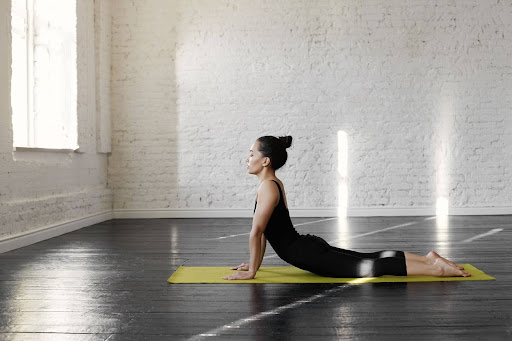
The shift to remote work has eliminated commutes and provided flexibility but created new challenges for maintaining spinal health. A yoga instructor reveals why working from home often proves worse for back health than office work despite apparent advantages, demonstrating that remote workers require enhanced self-discipline implementing protective practices that office environments previously enforced automatically.
This expert’s teaching begins with understanding why remote work often undermines back health despite eliminating commute stress and enabling schedule flexibility. Home environments rarely provide the ergonomic furniture and equipment available in offices—kitchen tables replace proper desks, couches or beds substitute for ergonomic chairs, laptops replace desktop computers with properly positioned monitors. Without workplace social cues and structures, remote workers often maintain sustained positioning for hours without the natural breaks that office environments create through conversations, meetings, and movement between spaces. The blurred boundaries between work and personal time lead many remote workers to work longer hours than when commuting, increasing total exposure to problematic positioning. Without the subtle peer pressure to maintain professional appearance and positioning, remote workers often adopt casual postures that prove comfortable briefly but problematic over extended duration.
The instructor emphasizes that successful remote work requires establishing structures and discipline that office environments previously provided automatically. Creating a dedicated workspace proves essential rather than moving between locations throughout the home. This enables investing in proper ergonomic setup at one location and establishes spatial boundaries helping maintain work-life separation. The workspace should include proper seating with adequate lumbar support (adding cushions to available chairs if necessary), appropriate desk height enabling relaxed shoulder positioning, and monitor at correct height enabling neutral head position.
Without natural workplace breaks, remote workers must create artificial structures ensuring regular movement. The instructor recommends setting calendar reminders or using timer apps to prompt movement every 30 minutes. These breaks should involve standing and implementing the five-step protocol at minimum: weight on heels, chest lifted, tailbone tucked, shoulders back with loose arms, chin parallel to ground. Every 60-90 minutes, breaks should include actual movement—walking around the home, performing the wall exercises, or stepping outside briefly.
The wall-based strengthening exercises prove particularly important for remote workers lacking the incidental physical activity that office environments provide. Walking to parking lots, moving between floors and buildings, and other workplace movement accumulates meaningful physical activity. Home workers lacking these opportunities should implement deliberate exercise compensating for reduced incidental activity. The instructor recommends performing the wall exercises twice daily: standing at arm’s distance, palms high, torso hanging parallel to ground, straight legs, holding one minute or longer; then arm circles and rotation, holding one minute or longer per side.
The instructor suggests establishing start-of-workday and end-of-workday routines that create boundaries while incorporating back care. Beginning the workday with the wall exercises, followed by implementing the five-step standing protocol before sitting down, prepares the body for sustained work positioning. Ending the workday by repeating the exercises signals work conclusion while addressing accumulated mechanical stress. These rituals create structure helping maintain work-life boundaries that otherwise blur in home environments.
The flexibility that remote work enables should include position variation that office environments don’t permit. While traditional offices discourage lying on floors or sitting cross-legged during meetings, home environments enable position experimentation that can reduce sustained static positioning’s negative effects. The instructor suggests exploring various working positions throughout the day—standing intervals, sitting on an exercise ball, kneeling at a low table, or even working lying prone on the floor reading documents. This variation reduces cumulative exposure to any single position, distributing mechanical stress more broadly across different tissues and positions.
For people finding sustained remote work challenging for back health despite implementing these strategies, the instructor suggests considering hybrid approaches using co-working spaces, coffee shops, or other external locations for part of the work week. These environments provide social structure encouraging better positioning through subtle peer pressure while offering ergonomic furniture and environmental variation that home offices may lack. Alternating between home and external locations weekly or even daily can provide the variation preventing the problems associated with sustained work in suboptimal home environments.