
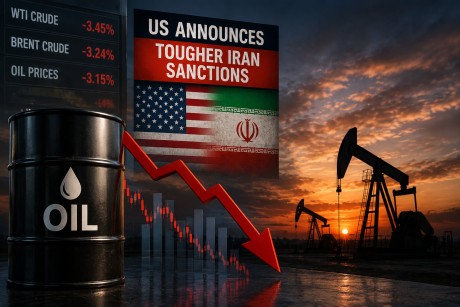
On Tuesday, oil prices experienced a significant decline, dropping over 3% to hit a one-week low. This downturn coincided with investor reactions to the United States’ latest round of sanctions aimed at Iran. Brent crude, recognized as the global oil benchmark, saw a decrease of 3.1%, closing at $89.31 per barrel. Similarly, the West Texas Intermediate (WTI) recorded a 3.34% decline, ending at $82.17. This fall in prices comes after a period of strong performance the previous week, where Brent and WTI posted gains of 6.6% and 5.7%, respectively.
The newly imposed U.S. sanctions target companies and nations involved in economic dealings with Iran, a move designed to exert additional pressure on Tehran amidst ongoing geopolitical tensions. These sanctions aim to further destabilize Iran’s economy, potentially affecting its oil export capabilities. As the situation unfolds, the oil markets remain acutely responsive to developments, particularly those concerning the strategic Strait of Hormuz, a crucial channel for global energy shipments.
Iranian authorities have issued warnings about the possibility of halting oil exports through the Strait of Hormuz if the U.S. continues to intensify its pressure. This strategic waterway is vital for the transportation of oil, and any disruptions could have significant implications for global energy markets. Additionally, the risks associated with shipping in the region have escalated, underscored by an incident involving a tanker being reportedly struck near Oman’s Musandam peninsula.
Further compounding the uncertainty are ongoing attacks in the Red Sea, which have contributed to the already volatile global energy supply situation. Despite these looming geopolitical threats, oil prices have receded, as traders are currently more focused on evaluating the potential effects of the new sanctions. The key question remains whether these measures will meaningfully impact Iran’s ability to continue exporting oil under the tightened economic constraints.