
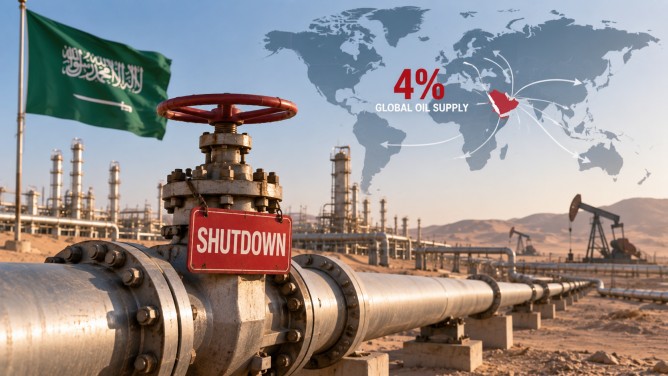
Saudi Arabia’s temporary closure of its crucial East-West oil pipeline has sparked concerns about the stability of global crude supplies. This move follows an attack on the pipeline, heightening anxieties about the secure flow of oil, particularly with Iran-backed Houthi forces expanding their control along Yemen’s Red Sea coast. The Houthis’ advancement in this strategic region, including the Bab el-Mandeb Strait that links the Red Sea to the Gulf of Aden, poses a potential threat to vital oil shipments.
The 1,200-kilometer East-West pipeline was shut down by Saudi Arabia on September 12 as a precaution after the previous day’s attack. This pipeline plays a pivotal role for the kingdom, enabling it to transport crude from its eastern oil fields to the Red Sea, thus offering an alternative export path should the Strait of Hormuz, a critical maritime chokepoint, face disruptions. The kingdom had increased its reliance on this route amid earlier disturbances in the Strait of Hormuz due to tensions in the US-Iran relationship.
Market experts have warned that if this pipeline remains closed for an extended period, it could significantly impact the availability of oil in global markets. With Brent crude prices already exceeding $100 per barrel due to rising tensions in the region, any prolonged disruption could exacerbate this trend. The security conditions around both the Red Sea and the Strait of Hormuz will be decisive in assessing the longer-term effects on oil supplies and energy markets worldwide.
Should disruptions persist in both the Strait of Hormuz and the Bab el-Mandeb Strait, the implications could be far-reaching. These major shipping routes are vital for global energy distribution, and any restrictions could lead to increased transportation costs and further elevate crude prices. The ripple effect of higher oil prices could drive inflation in major economies by raising costs for fuel, transportation, and production.
Nations heavily dependent on imported energy might experience additional economic strain, affecting trade balances and currency stability. The ongoing situation underscores the importance of closely monitoring the duration of the Saudi pipeline shutdown and maintaining vigilance over the security developments in the Red Sea and surrounding areas.