
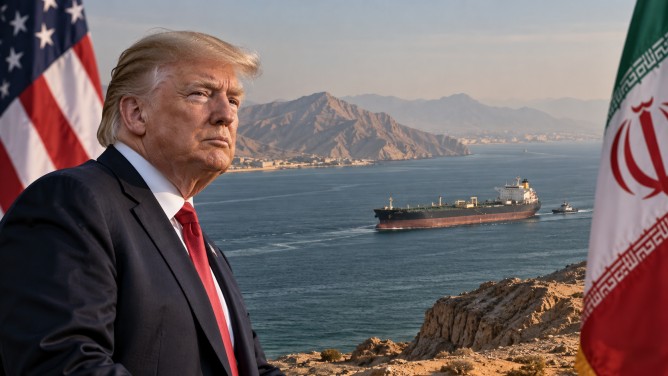
In the wake of indirect discussions during the United Nations General Assembly, U.S. President Donald Trump has expressed an expectation for further negotiations with Iran, despite having rejected a recent proposal from Tehran concerning the Strait of Hormuz. The proposal, communicated via Qatar, involved reopening the vital waterway under a seven-day plan that included stipulations such as lifting the U.S. naval blockade, easing sanctions, and releasing frozen Iranian assets.
While Trump acknowledged that Iran is seeking an agreement, he stated that the current proposal does not align with U.S. requirements. This comes after indirect talks between the two nations, highlighting the ongoing tension over Iran’s nuclear program and regional security dynamics.
The Strait of Hormuz remains a central point of contention due to its critical role in global energy shipments. Iranian Foreign Minister Abbas Araghchi’s plan suggested that negotiations on Iran’s nuclear program could resume if the proposed conditions were met. However, U.S. officials expressed concerns about the preconditions set by Iran before any potential negotiations could advance.
Despite the rejection of the Iranian proposal, Trump signaled that U.S. representatives might engage in more talks with Iran, focusing on issues such as the reopening of the Strait of Hormuz, easing of sanctions, and broader objectives aimed at reducing tensions in the region.
The diplomatic efforts surrounding the Strait of Hormuz carry significant implications for international energy markets and regional stability. Any agreement that restores normal maritime traffic through the strait would be pivotal not only for U.S.-Iran relations but also for the broader geopolitical landscape.